
DISCOVER NUMEROLOGY 01 — 06
Every number.
A story.
From the first marks we made to the meanings we find today. Follow the human fascination with numbers — across time, cultures and your own life.
Begin the journeyBefore numbers had names, the world had patterns.
1 · 2 · 3 · ∞
First we counted. Then we wondered.
Days and seasons. People and possessions. The history of numbers begins with practical questions, while the search for their deeper meaning follows many different paths.
02 / Recording the world
When counting became writing.
A harvest. A flock. A trade. In the cities of Mesopotamia, clay tokens and tablets helped people record what they owned and exchanged. Numbers made everyday life visible — and helped shape the beginnings of writing.
This is the history of counting and record keeping, not evidence of modern numerology.
Historical source · The Metropolitan Museum of Art ↗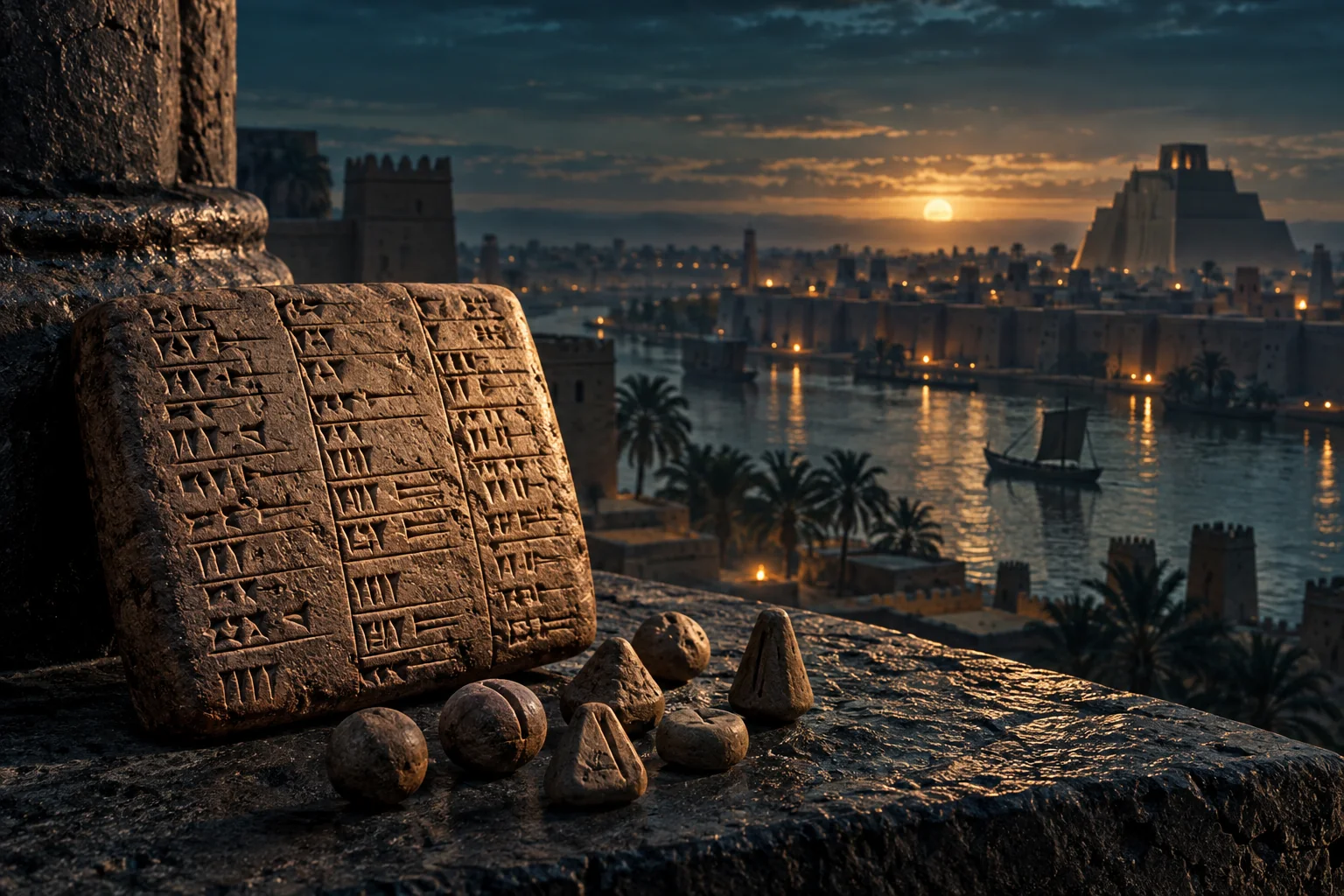
03 / Seeking harmony
Could numbers explain the cosmos?
The Pythagorean tradition connected number, proportion and the order of the world. Musical intervals offered a striking example of relationships expressed through ratios. Number became a way to think about harmony, as well as quantity.
Pythagoras left no writings. Later accounts mix history and legend; today’s name charts should not be presented as his documented invention.
Explore the Pythagorean tradition Historical source · Stanford Encyclopedia of Philosophy ↗
04 / Numbers become symbols
Many traditions. Many meanings.
Numbers also became a language for ideas: unity, balance, completeness and renewal. Religious texts, philosophy and literature gave them different meanings in different settings. These traditions do not form one universal code — their context matters.
Symbolic interpretation varies between cultures and schools. A shared number does not necessarily mean a shared belief.

05 / From symbols to self-reflection
A more personal reading of numbers.
Modern numerology turns attention toward names and birth dates. Practitioners assign letter values, add digits and interpret the resulting numbers through their chosen system. Different schools use different conventions, including how they handle master numbers.
Numerology is a symbolic practice for reflection; it is not a scientifically validated method of predicting personality or future events.
See how the calculations work
06 / From history to your story
What do you see in your numbers?
Here, Åse Steinsland’s approach brings numerical calculations together with personal interpretation. Start with the method, explore the meanings, and use the questions that resonate with you as a starting point for reflection.
The calculation follows a rule. The meaning is an interpretation. Your choices remain your own.
Explore your numbers

Since 1997
Your guide
Åse Karin Steinsland
Numerologist and life guide near Bergen. Personal analyses since 1997.
“Calculate the parts. Then read the whole.”
Keep exploring
1 · 2 · 3 · 4 · 5 · 6 · 7 · 8 · 9
A few questions along the way
Is numerology the same as astrology?
No. Numerology interprets numbers derived from names and dates; astrology interprets celestial positions. Some practitioners combine them, but they are different systems.
Did Pythagoras invent modern numerology?
Modern systems often draw inspiration from Pythagorean ideas. That is different from establishing that Pythagoras invented today’s letter charts or personal readings.
Where can I begin?
Follow the calculation guide or explore the calculator suite. Read which rules are being used before comparing results between different systems.